Learning to Bake (and Sing) Under Pressure

Being cast in The Great British Bake Off Musical is both exciting and terrifying. It’s a brilliant show, but also a complex one – full of harmonies, overlapping dialogue, and quick transitions. Because it’s a parody of the TV show, the cast are on stage for around 90% of the performance. There’s no hiding. Every move, every note, every moment counts.

The Great British Bake Off The Musical

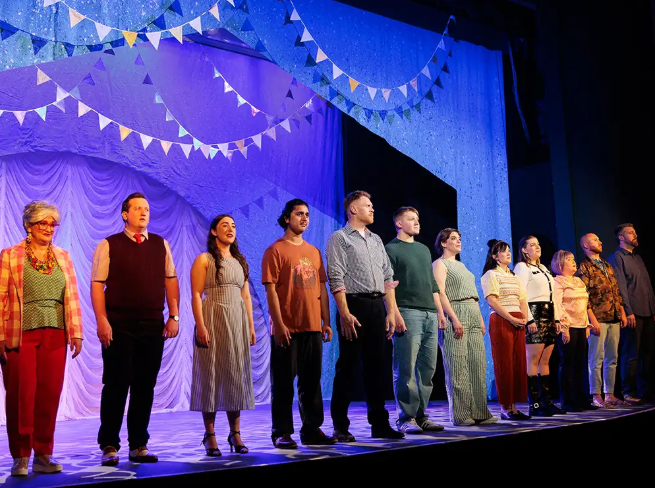
I went to see a production of it last Saturday at the Joseph Rowntree Theatre in York, and walked away genuinely blown away by the cast and performances. The role of Babs was a real standout – sharp, funny, and beautifully sung. There were some sound issues; the band occasionally overpowered the vocals and a few solo moments lost consistency. But viewed through the lens of an amateur production, it was an impressive achievement across the board. Seeing it live gave me a much clearer sense of the show’s rhythm – how the songs and libretto flow from start to finish.

York Cast - The Great British Bake Off Musical

The role I’m playing, Ben, was well-acted by the performer in that production. He carried the vocals solidly, though it missed a bit of warmth and charisma. Gemma’s role, meanwhile, is a fine balance to play – written as insecure but bubbly, she risks coming across as self-deprecating for validation if not handled carefully. It’s a northern character full of heart, so it needs lightness and sincerity rather than self-pity.

Babs - The Great British Bake Off Musical

We’ve had a number of rehearsals now, and I’ll be honest – a lot of it is still a blur. I’m struggling to retain some of the harmonies we worked on last week, and without recordings to reference, it’s hard to anchor them in memory. Maybe that’s normal; maybe it’s just part of my process. Either way, I’ve found some extra singing support outside of rehearsals to go over the songs once a week, so I’m doing what I can to keep building confidence and stamina.

It’s a lot to learn, but it’s also a privilege. Stepping into this show feels like throwing myself into the deep end – and trusting I’ll learn to swim somewhere between the notes.

I Thought Music Promo Services Would Bring Listeners. It Mostly Brought Clarity.

Two years into releasing music, I’ve learned that most of what gets called promotion isn’t really about reaching listeners. It’s about chasing the feeling of progress. When I first started, I thought SubmitHub, MusoSoup and all the other platforms were just part of the process — the unspoken checklist every independent artist was meant to follow. Skip them and the music would vanish into the noise, or so it seemed.

Andrew Flynn Music

SubmitHub came first. I poured time and money into it, convinced it was the route forward. Rejections rolled in, a few approvals here and there, but none of it translated into actual listeners. I wasn’t investing in growth — I was paying to feel like I hadn’t stopped trying. That’s the trap: mistaking motion for movement.

MusoSoup looked better at first. Eighty playlists sounded like momentum. But when the data came in, there were three genuine plays, all from one list. The rest were empty shells, the kind that exist for screenshots more than sound. It hit me then that most “promotion” platforms sell the appearance of traction, not connection. The only lasting value came from a handful of written reviews that helped with search visibility. Useful, yes — but still surface-level.

ReverbNation was another system on autopilot, built for an earlier era. No bad intent, just a product of habit. It taught me something though: if I can’t take something away and reuse it myself, it’s not really helping me.

The Unsigned Guide changed that. It gave me tools, not illusions — a way to build my own radio list, to contact people directly, to own my process. That was the moment I understood the difference between renting momentum and building it.

BBC Introducing still makes sense to me because it remembers. It recognises consistency, not one-off campaigns. When you keep showing up, it builds a record of your work. That’s real progress.

Looking back, I wasn’t paying for promotion — I was paying for reassurance. It’s what every independent artist wants when they’re creating in a vacuum: proof that the work is landing somewhere. But the truth is, the only things that ever mattered came from real people. Messages from listeners. Someone sharing a song because it spoke to them. The slow, quiet kind of growth that lasts.

Now I measure success differently. I don’t care about numbers that look good; I care about the ones that mean something. I’d rather have ten real listeners than a thousand empty clicks. The illusion doesn’t interest me anymore.

The goal now is simple — make music, share it honestly, let it find its people. No gimmicks, no treadmill. Just the real thing, at its own pace.

Learning to Give Honest Music Feedback Without Apologising for It

I am in the middle of rebuilding my track Ghost into something new. I wanted a version that felt bigger, more cinematic, more alive, and something in me thought the hard part would be the music itself. It turns out the hardest part has been learning how to give honest feedback without slipping into old habits of softening myself to avoid discomfort. I did not expect that to be the main lesson, but here we are.

GHOST1.0

When I heard the first full draft of the new version, I felt something shift straight away. The song sounded good, but it did not feel right. The emotion that originally sat at the centre of the track in the demo was not landing the same way. In the past I would have ignored that feeling or convinced myself it was just me being picky. I would have sent a polite message full of disclaimers and maybes, hoping the other person would somehow read my mind and fix what I could not fully express.

That is what people pleasing looks like in music. It is not about being fake. It is about making yourself smaller so you do not risk being seen as difficult. I have done that for years. I used phrases like “something feels off” because I did not want to be too direct. It was a way of protecting other people’s feelings at the expense of my own work and my own instincts.

This time I stopped myself. I listened again, not as the person who wants to be liked, but as the artist responsible for the emotional truth of the song. Then I went deeper. I compared the demo I loved to the new version using analysis tools that helped me actually see what my ears were telling me. I looked at presence curves, emotional energy maps, and how the vocal was sitting in the mix. I used Cyanite to confirm that the emotional profile of the song had changed. The vocal space had moved backwards and the production elements were taking over the part of the track where the feeling used to live. I was not imagining it. The emotion really had shifted.

Once I had clarity, the fear fell away. I was able to say what needed to be said without over explaining or apologising. Not with technical jargon to sound clever, and not with vague feelings that left everything open to interpretation. Just simple, grounded truth. The vocal needs to lead again. The emotional space matters more than the extra polish. The song cannot lose the thing that makes it human.

That realisation comes from the artists I grew up loving. Celine Dion taught me that the emotional core of a song is not optional. It is the point. And I refuse to release a version of Ghost that sounds better on paper but feels worse in the body.

What surprised me most is that the moment I stopped trying to cushion the feedback, the collaboration actually got easier. There was no conflict. No defensiveness. Just clarity. It turns out the disaster I was afraid of was never real. The only thing getting in the way was my own belief that honesty equals discomfort. It does not. Honesty equals direction. And the song deserves direction.

So the new version of Ghost is still being shaped, and so am I. I am learning how to protect the work without apologising for it. I am learning that being clear is not the same thing as being unkind. And I am learning that if I do not speak up for the emotional truth of a song, no one else can do it for me.

GHOST2.0 comes out in January. It will be the most emotionally accurate version of the track I have ever released, not just because the music evolved, but because I did.

No more softening. No more avoiding clarity. No more “something feels off but I do not know why.”

I know exactly why now. And I say it.

Listen to the original released April 2025

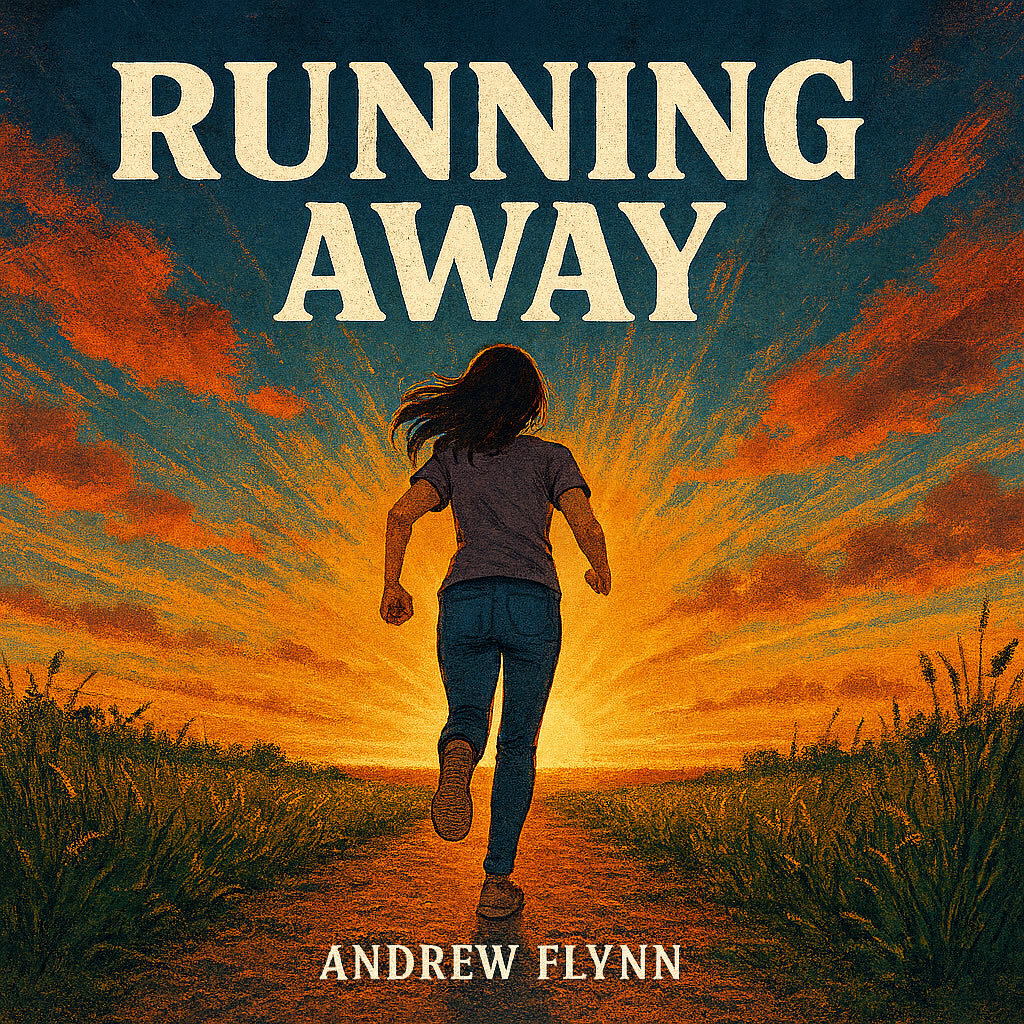
Running Away — the song I stopped overthinking and finally released

I’ve released my new track, Running Away, and this one feels different. I recorded it last December and spent months convincing myself it wasn’t ready. I kept thinking I should re-record the vocal, add more layers, maybe get it mixed again. Eventually I realised I wasn’t improving it, I was just avoiding letting it go. The song was already done. It already said what it needed to say. So I stopped trying to perfect it and finally released it.

I’m still making everything from a small home studio in the North-East, fully independent. No label, no manager, no PR team, no viral strategy. Just the work. And somehow, the music is travelling anyway.

My songs have reached listeners in the US, Brazil, Germany, Spain, Italy and the Netherlands, and have been picked up by playlists and music blogs without paid promotion or industry backing. It feels like proof that the old model of “breaking” an artist is fading. If a track connects with someone, it moves. You don’t need hype. You just need truth in the music.

Some of the reviews for Running Away:

“‘Running Away’ belongs to a rare strain of synth-pop that doesn’t chase attention but earns it through emotional honesty.” – Indie Dock


“Captures the moment where pain turns into clarity.” – Hailtunes


“A nostalgic yet modern synth-pop palette that feels like a personal breakthrough disguised as a pop track.” – TJPL News


“Cinematic and cathartic, Flynn refuses to trade storytelling for surface gloss – Hit Harmony Heaven

Running Away turns heartbreak into strength. – musicpool

I also got an email saying Running Away was listened to by the BBC Radio 1 Introducing Dance team. It doesn’t mean airplay, but someone at Radio 1 pressed play. That matters. Every track I’ve uploaded – True Love Is Inside You, Capsized Heart, Scrolling for Love, Ghost, and now Running Away – has been heard by BBC Introducing teams, from my local North-East producers to national selectors. No broadcast yet, but it’s a reminder that progress isn’t always visible. Sometimes your work is moving even when it looks like nothing is happening.

Running Away came from a moment where I realised you don’t always need a map, you just need movement. The fear of staying the same was bigger than the fear of change. Releasing the track was part of that same lesson: stop waiting for perfect and let the thing exist.

Next steps are simple: keep writing, keep releasing, keep building slowly and on my own terms. I’m not trying to break overnight. I’m building something that lasts.

If you’ve listened, shared, saved, reviewed, or even just paused long enough to hear the song, thank you. I’m doing this without a machine behind me, so every listener matters. Running Away is out now on all platforms.